
Every year, we conduct research that helps us create a water quality “data map” of the Potomac. Here’s a video depicting what that research is like.
Category: Blog
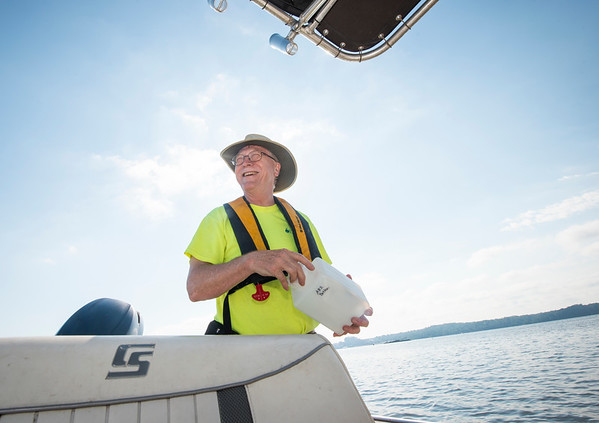
Alexandria Renew Enterprises featured our Hunting Creek research in a recent video.
RiverRenew on Vimeo.
- *The programs and services offered by George Mason University are open to all who seek them. George Mason does not discriminate on the basis of race, color, religion, ethnic national origin (including shared ancestry and/or ethnic characteristics), sex, disability, military status (including veteran status), sexual orientation, gender identity, gender expression, age, marital status, pregnancy status, genetic information, or any other characteristic protected by law. After an initial review of its policies and practices, the university affirms its commitment to meet all federal mandates as articulated in federal law, as well as recent executive orders and federal agency directives.
As a kid, Tom Hutchinson never thought he’d get to be a scientist. Hear him talk about the thrill of DNA extraction and research, all conducted while he is an undergraduate, through the Office of Student Scholarship. Tom was the very first student researcher in Dr. Jen Salerno’s lab. He continued working with her, through the Undergraduate Research Scholar Program, with Dr. Salerno as his mentor.
With the support of George Mason’s Office of Student Scholarship the PEREC team is able to provide students with unique and life-changing research experiences.
Want to know more about Tom’s research? Here’s his video from the 2020 GMU Research Symposium.
- *The programs and services offered by George Mason University are open to all who seek them. George Mason does not discriminate on the basis of race, color, religion, ethnic national origin (including shared ancestry and/or ethnic characteristics), sex, disability, military status (including veteran status), sexual orientation, gender identity, gender expression, age, marital status, pregnancy status, genetic information, or any other characteristic protected by law. After an initial review of its policies and practices, the university affirms its commitment to meet all federal mandates as articulated in federal law, as well as recent executive orders and federal agency directives.
Undergraduate Katie Russell conducted research on river herring with Dr. de Mutsert. She presented at the GMU Spring 2020 Symposium, where she was also award the OSCAR Student Excellence Award.
- *The programs and services offered by George Mason University are open to all who seek them. George Mason does not discriminate on the basis of race, color, religion, ethnic national origin (including shared ancestry and/or ethnic characteristics), sex, disability, military status (including veteran status), sexual orientation, gender identity, gender expression, age, marital status, pregnancy status, genetic information, or any other characteristic protected by law. After an initial review of its policies and practices, the university affirms its commitment to meet all federal mandates as articulated in federal law, as well as recent executive orders and federal agency directives.
Advised by Dr. Amy Fowler and Dr. Dann Sklarew, ESP undergraduate Ben Rhoades won the 2020 OSCAR Student Excellence Award for his research on microplastics in the Potomac.
- *The programs and services offered by George Mason University are open to all who seek them. George Mason does not discriminate on the basis of race, color, religion, ethnic national origin (including shared ancestry and/or ethnic characteristics), sex, disability, military status (including veteran status), sexual orientation, gender identity, gender expression, age, marital status, pregnancy status, genetic information, or any other characteristic protected by law. After an initial review of its policies and practices, the university affirms its commitment to meet all federal mandates as articulated in federal law, as well as recent executive orders and federal agency directives.
For 35 years, Dr. Chris Jones has sampled Gunston Cove, a tributary to the Potomac. He has recently published a long-term study, tracking the ecosystem’s recovery. The results of his research indicate that submerged aquatic vegetation (SAV) have returned (previously, there was none) as a result of increased water clarity. SAV provide important habitats for fish and invertebrates in the Potomac River. While there is still a long-way to go, this study demonstrates that it is possible to recover ecosystems that have been damaged by pollution. You can read Recovery of a Tidal Freshwater Embayment from Eutrophication: a Multidecadal Study here.
Abstract:
Effective management of eutrophication in tidal ecosystems requires a thorough understanding of the dynamics of their responses to decreases in nutrient loading. We analyze a 34-year dataset on a shallow embayment of the tidal freshwater Potomac River, Gunston Cove, for long-term responses of ambient nutrient levels, light transparency measures, phytoplankton biomass, and coverage of submersed aquatic vegetation (SAV) to decreased nutrient loading. Point source loading of phosphorus, the nutrient most limiting primary production in this system, was greatly curtailed coincident with the study onset (1983/84) exhibiting a sharp decrease of 95% from peak loading levels. However, water column total phosphorus decreased much more slowly and gradually. Phytoplankton chlorophyll a did not show a distinctive decrease until 2000 and SAV responded strongly beginning in 2004. The habitat suitability model for SAV developed by Chesapeake Bay researchers was able to explain the recovery of SAV coverage based on data on light transparency and basin morphometry collected in this study. The study results were consistent with the alternative stable state theory with a sharp transition from a phytoplankton-dominated “turbid water” state to an SAV-dominated “clear water” state in a 2-year period from 2003 to 2005. The system eventually responded to nutrient load reductions, but the nonlinear and incomplete nature of this recovery and the two-decade delay illustrate the complexities of managing these systems.
- *The programs and services offered by George Mason University are open to all who seek them. George Mason does not discriminate on the basis of race, color, religion, ethnic national origin (including shared ancestry and/or ethnic characteristics), sex, disability, military status (including veteran status), sexual orientation, gender identity, gender expression, age, marital status, pregnancy status, genetic information, or any other characteristic protected by law. After an initial review of its policies and practices, the university affirms its commitment to meet all federal mandates as articulated in federal law, as well as recent executive orders and federal agency directives.
What kind of research opportunities are open to George Mason undergraduates? Hear from Keith, a student encouraged to apply for a Research Experience for Undergraduates (REU) by Dr. Cindy Smith. Hear him talk about what it was like to research fisheries with the Gulf of Maine Institute (https://www.gmri.org).
- *The programs and services offered by George Mason University are open to all who seek them. George Mason does not discriminate on the basis of race, color, religion, ethnic national origin (including shared ancestry and/or ethnic characteristics), sex, disability, military status (including veteran status), sexual orientation, gender identity, gender expression, age, marital status, pregnancy status, genetic information, or any other characteristic protected by law. After an initial review of its policies and practices, the university affirms its commitment to meet all federal mandates as articulated in federal law, as well as recent executive orders and federal agency directives.
Congratulations to the students of Dr. Kim De Mutsert on the following accolades:

Sara Marriott was awarded a prestigious SESYNC Graduate Pursuit Fellowship, which is an an 18-month fellowship in which she is part of an interdisciplinary team that will be researching “A socio-environmental approach to improve offshore aquaculture and policy: Gulf of Mexico case study.” It supports travel and meetings to conduct research, provides access to SESYNC workshops and resources, as well as a stipend/honorarium of $2,000.
Sammie Alexander received a $5,000 program development award from Virginia Sea Grant for her project: “Assessment of fish passage use and success in facilitating movement of regionally vulnerable and invasive fish species in northern Virginia portion of the Potomac River.” This is the second award she has received from VA Sea Grant.

Casey Pehrson was awarded the Robert D. Ross Graduate Scholarship in fisheries and related aquatic sciences from the Virginia Chapter of the American Fisheries Society. She received the second place award, which comes with a $250 check.
Katie Russell won the best undergraduate poster award at the Virginia Chapter of the Wildlife Society Conference that was held this week.
- *The programs and services offered by George Mason University are open to all who seek them. George Mason does not discriminate on the basis of race, color, religion, ethnic national origin (including shared ancestry and/or ethnic characteristics), sex, disability, military status (including veteran status), sexual orientation, gender identity, gender expression, age, marital status, pregnancy status, genetic information, or any other characteristic protected by law. After an initial review of its policies and practices, the university affirms its commitment to meet all federal mandates as articulated in federal law, as well as recent executive orders and federal agency directives.

I am very excited to share what our lab has been working on for the 2019 Summer Impact Research Project: Microbial Communities as Indicators of Ecological Health. Dhanush Banka (a student from Thomas Jefferson High School for Science and Technology) and I have been working in Dr. Salerno’s lab at the Potomac Science Center, George Mason’s research center on the Occoquan River. Our environmental samples have been collected by Dr. van Aken’s lab, where fellow OSCAR student Nick Mills is working on the sediment samples. My focus is on the water samples taken from Cameron Run and Hunting Creek in Alexandria, VA as part of the environmental monitoring project that GMU does in association with Alexandria Renew Enterprises, the local wastewater processor for that area.
This is the first year that water samples are being surveyed to determine the microbial population. We have learned how to perform DNA extractions from the samples, how to quantify our results using two different methods, and also how to amplify the DNA in preparation for submitting the samples for DNA sequencing. We’ve been waiting patiently for the sequencing data, which will allow us to identify not only the types of bacteria present, but also the relative abundances to be able to get an idea of the composition of the microbial community. We’re correlating those results with rainfall, water flow, river height, and temperature data to build a profile and possibly model how changes in the environment will affect the microbial community. Since Cameron Run parallels the Capital Beltway and Hunting Creek adjoins Alexandria, the water samples are from an urban environment, and we expect the composition of the microbial community to reflect that.

As with most things regarding our environment, we don’t know where we’re going if we don’t know where we’ve been. Without some initial information, surveys, or records, we don’t know what affect our changing climate or other anthropogenic activities are making in our own environment. The unseen microbial community far outnumbers all of the life that we can see, and because it grows so much more quickly than other visible organisms the microbial community is the ‘pulse’ of the environment. Our ability to identify microbial families through the use of environmental DNA is a breakthrough, a new tool that we’re only beginning to learn how to use. We now have the genetic tools available to discover far more detail about the world around us than we have ever had in our history. As an older, non-traditional student, I’m excited to be part of this research, even as an undergraduate student. These new tools, this new technology, and these new techniques are what inspired me to pursue a degree in biology. That’s what I wanted to learn and that’s why I’m at George Mason University where I am part of a team using these tools to conduct real field research in my own community.
- *The programs and services offered by George Mason University are open to all who seek them. George Mason does not discriminate on the basis of race, color, religion, ethnic national origin (including shared ancestry and/or ethnic characteristics), sex, disability, military status (including veteran status), sexual orientation, gender identity, gender expression, age, marital status, pregnancy status, genetic information, or any other characteristic protected by law. After an initial review of its policies and practices, the university affirms its commitment to meet all federal mandates as articulated in federal law, as well as recent executive orders and federal agency directives.