
Dr. Rosalina Christova, Resident Faculty Fellow at the Potomac Environmental Research and Education Center (PEREC), has been elected to the National Harmful Algal Blooms Committee. Along with an esteemed cohort of colleagues in the field, the HAB Committee interfaces with stakeholders, including state and federal agencies; raises awareness for harmful algal blooms and related issues; provides guidance on algal issues; and facilitates the implementation of important HAB mitigation and response strategies. We at PEREC congratulate Dr. Christova for this exciting and important position!
Author: Sydney Jackson
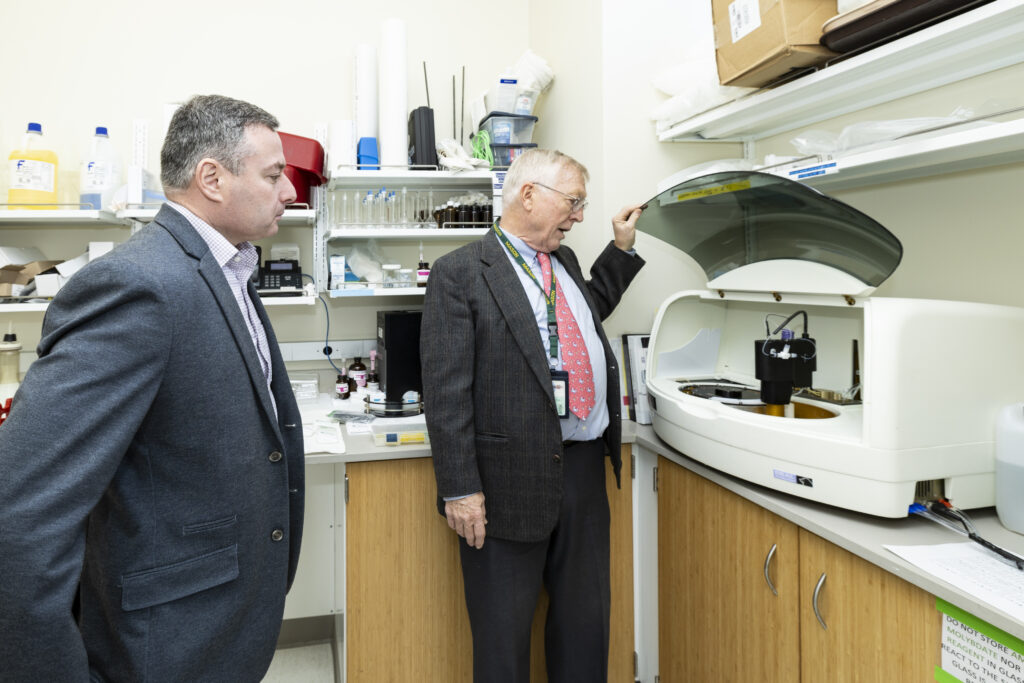
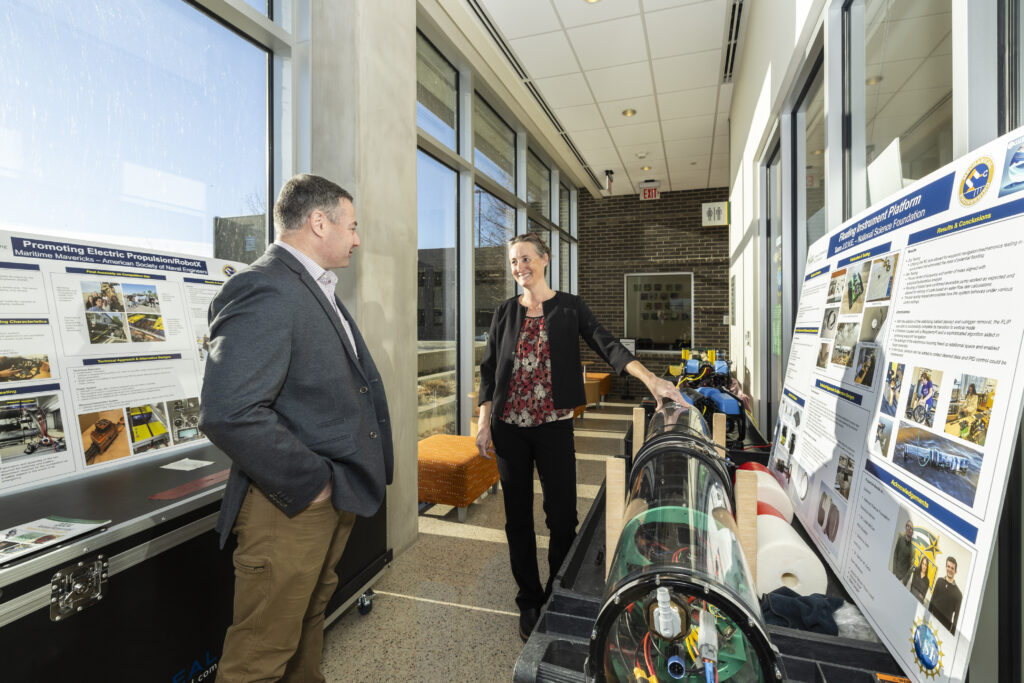
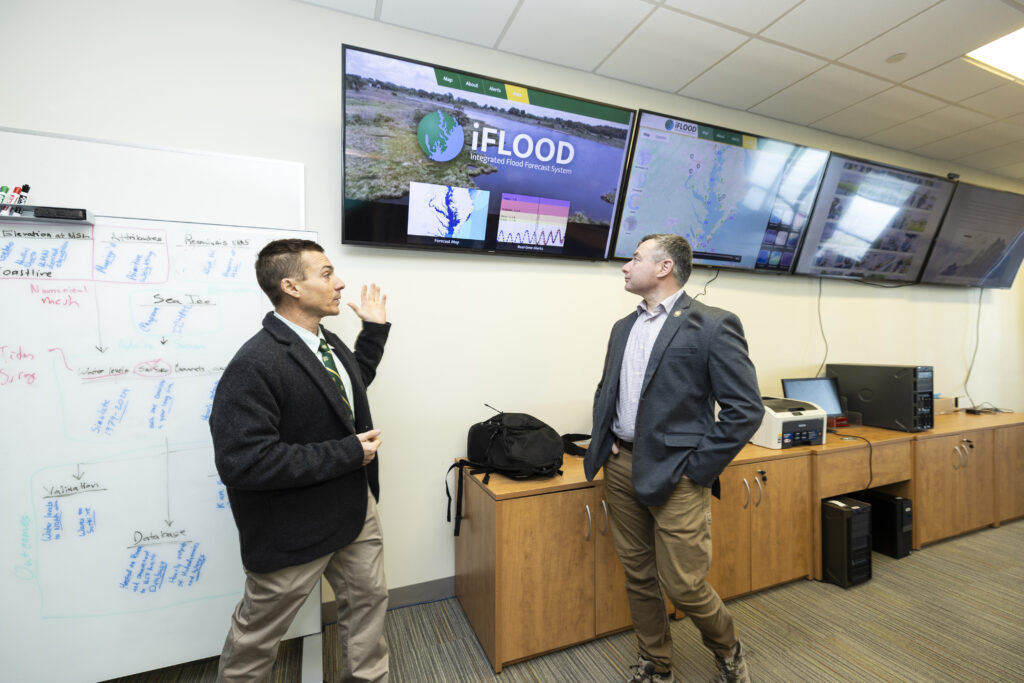
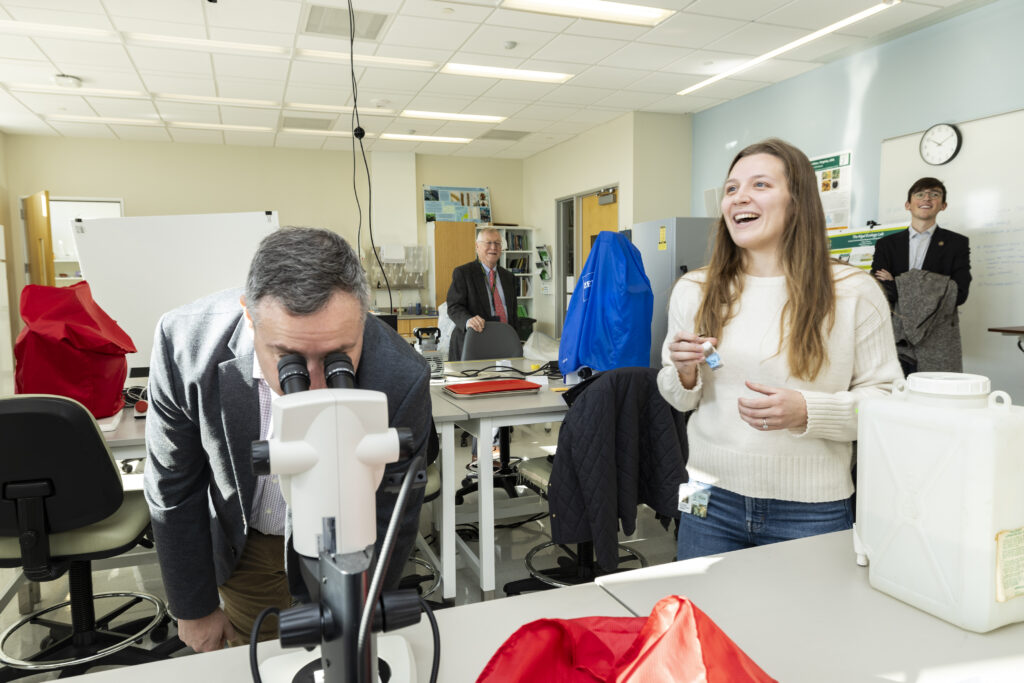
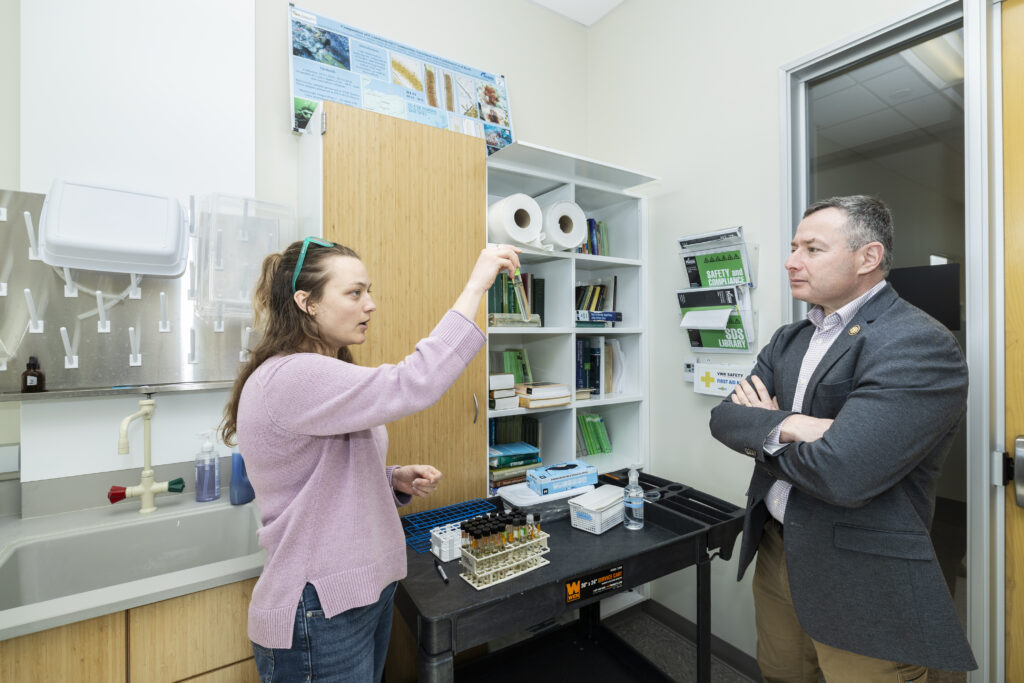
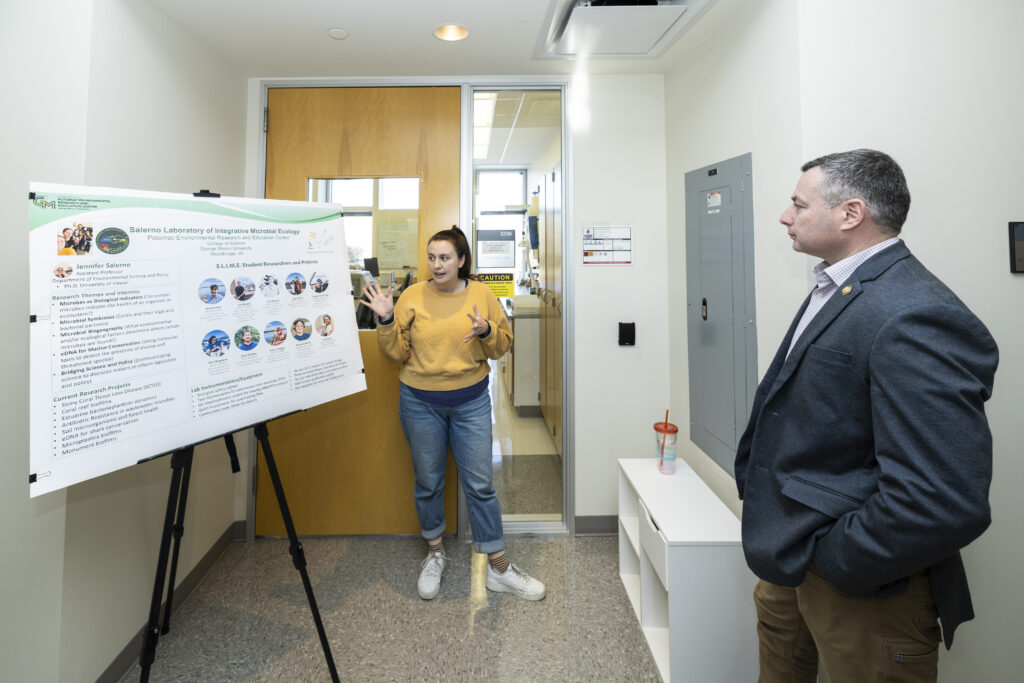
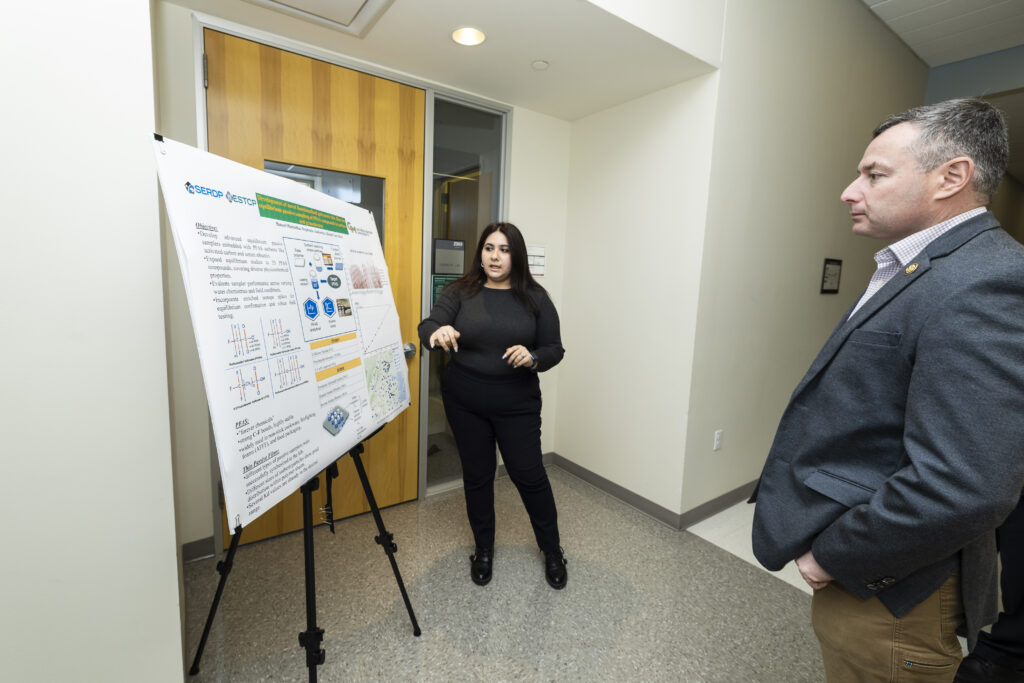
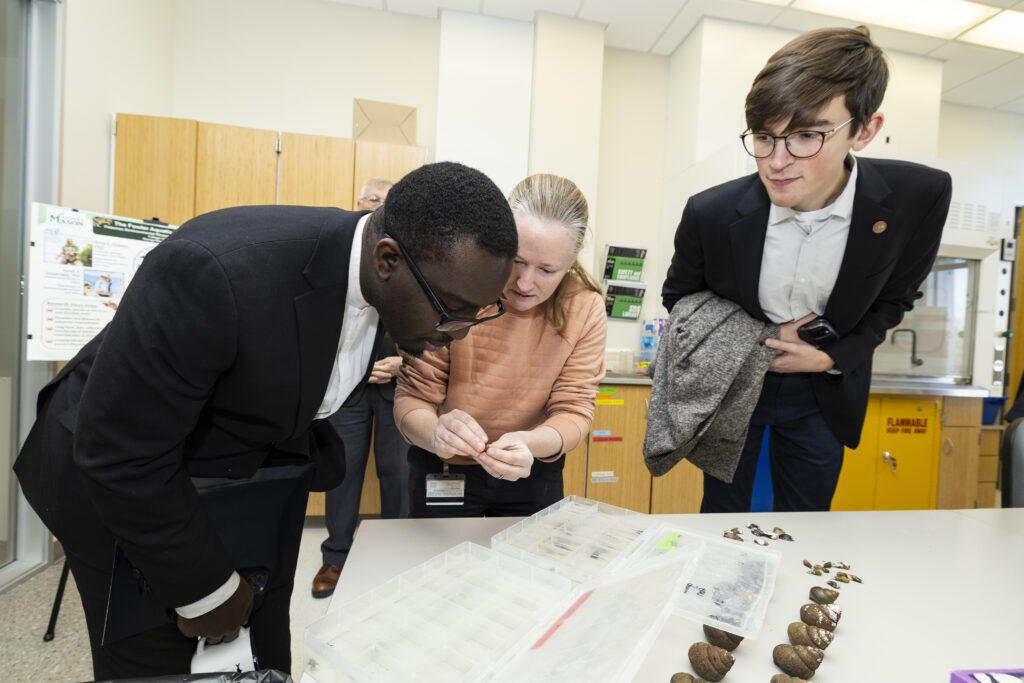
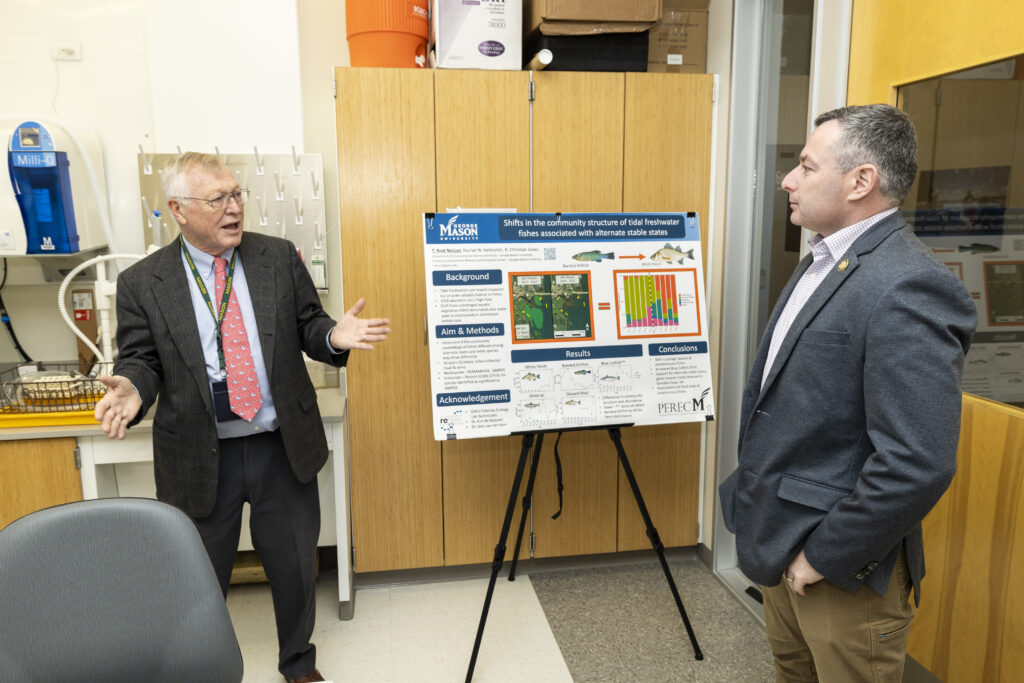
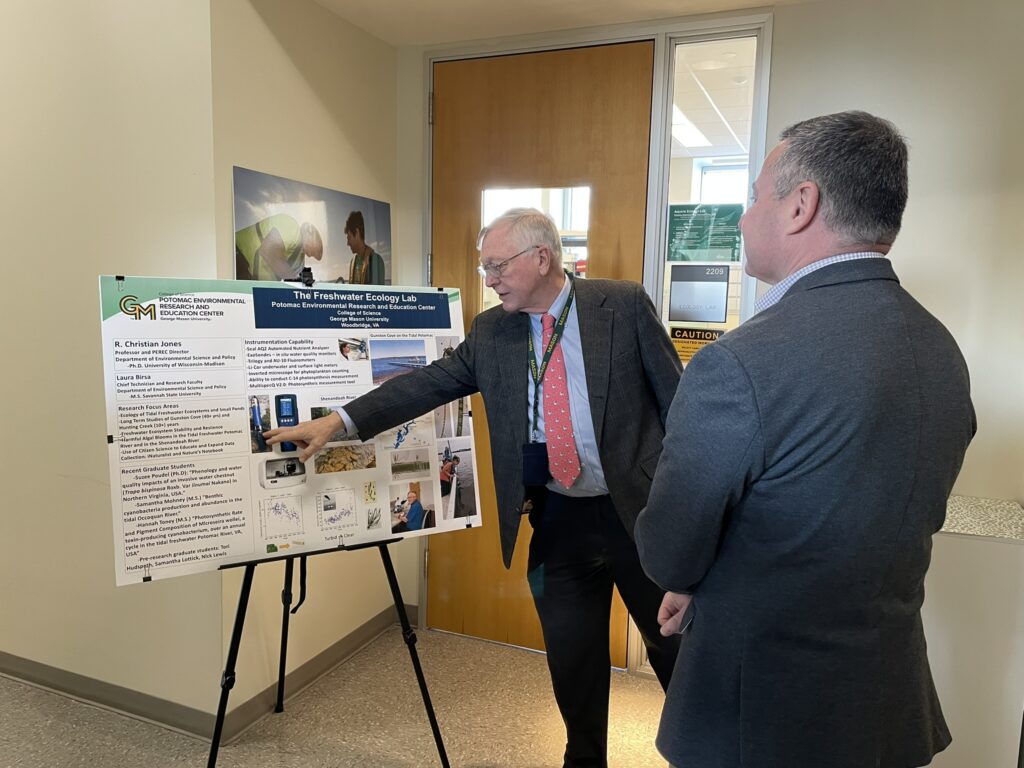
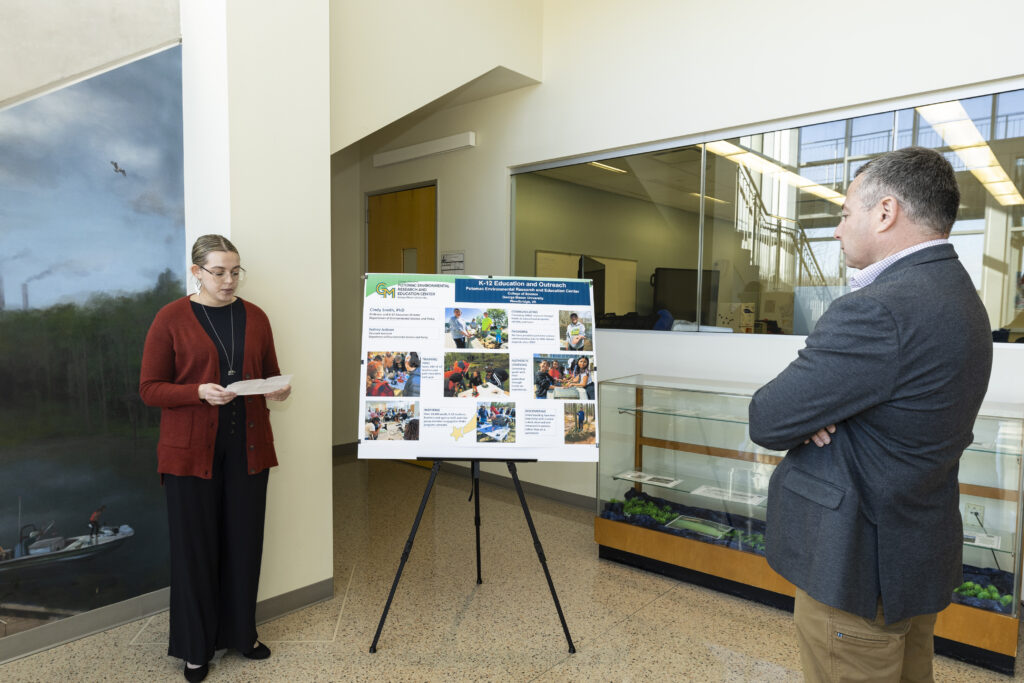
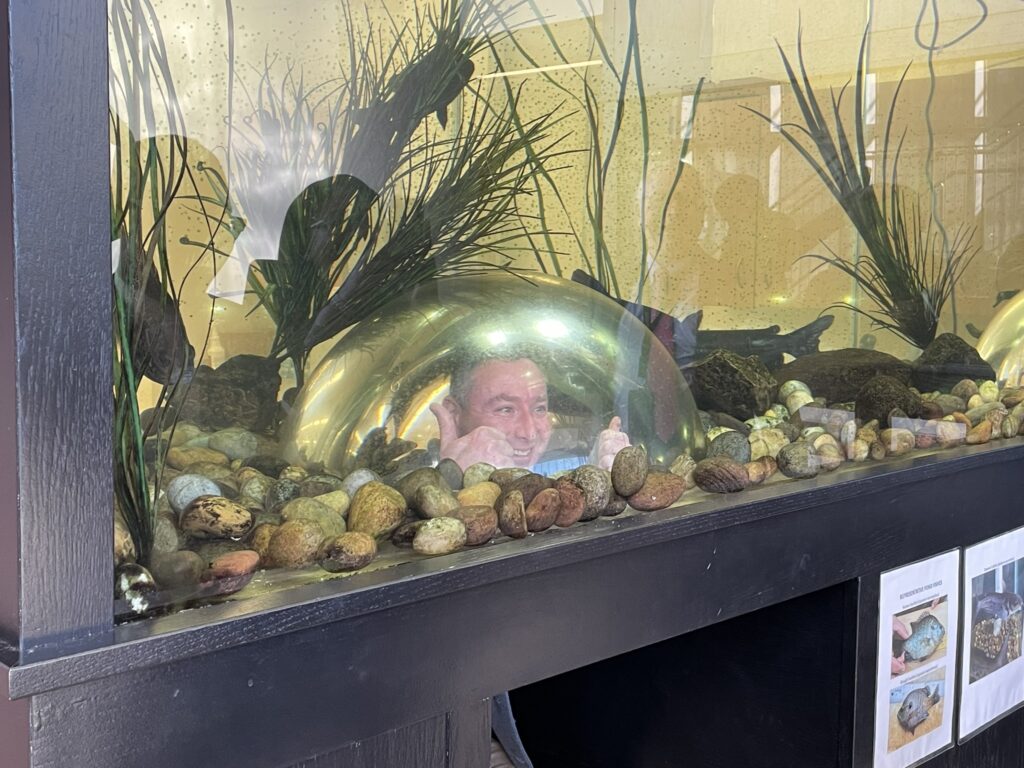
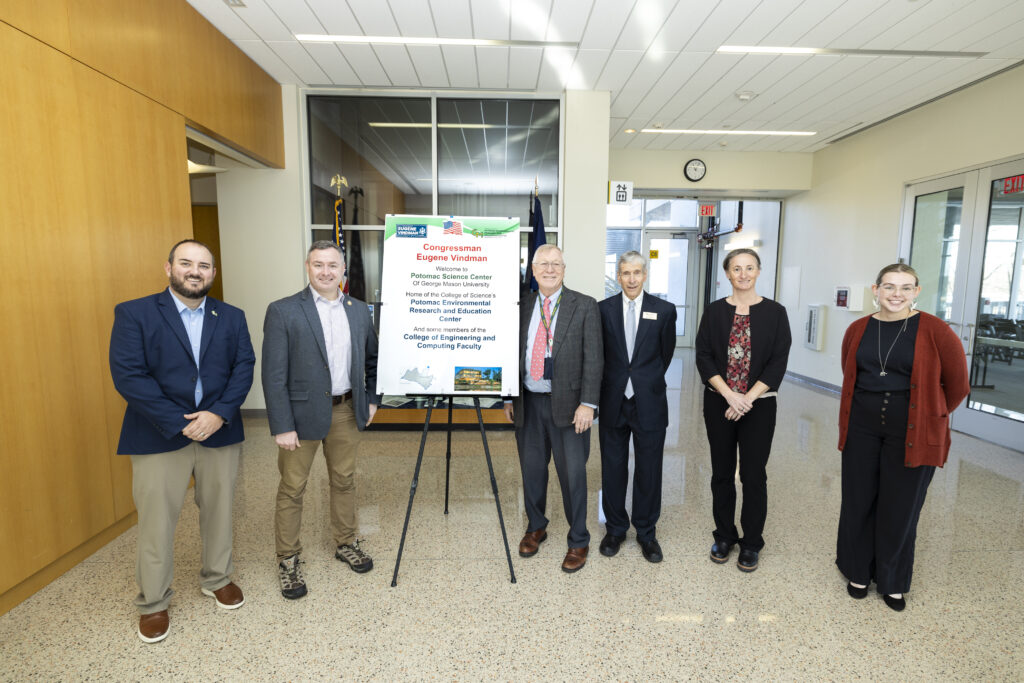
On January 28, 2025, the Potomac Science Center had the pleasure of hosting Congressional Representative Eugene Vindman (VA-7) and his staff for a tour of the facility. PEREC Director Dr. Chris Jones led the tour, and Rep. Vindman met members of the many labs housed at PSC. Thank you to Rep. Vindman, his team, Ron Aira from GMU’s Creative Services, and the many lab members around PSC who shared their research with everyone!
Meet Anna Siegle, an incredible alumna of George Mason University who graduated in the spring of 2023. With a degree concentration in Conservation, Anna has many valuable and exciting experiences under her belt as an early-career conservationist.
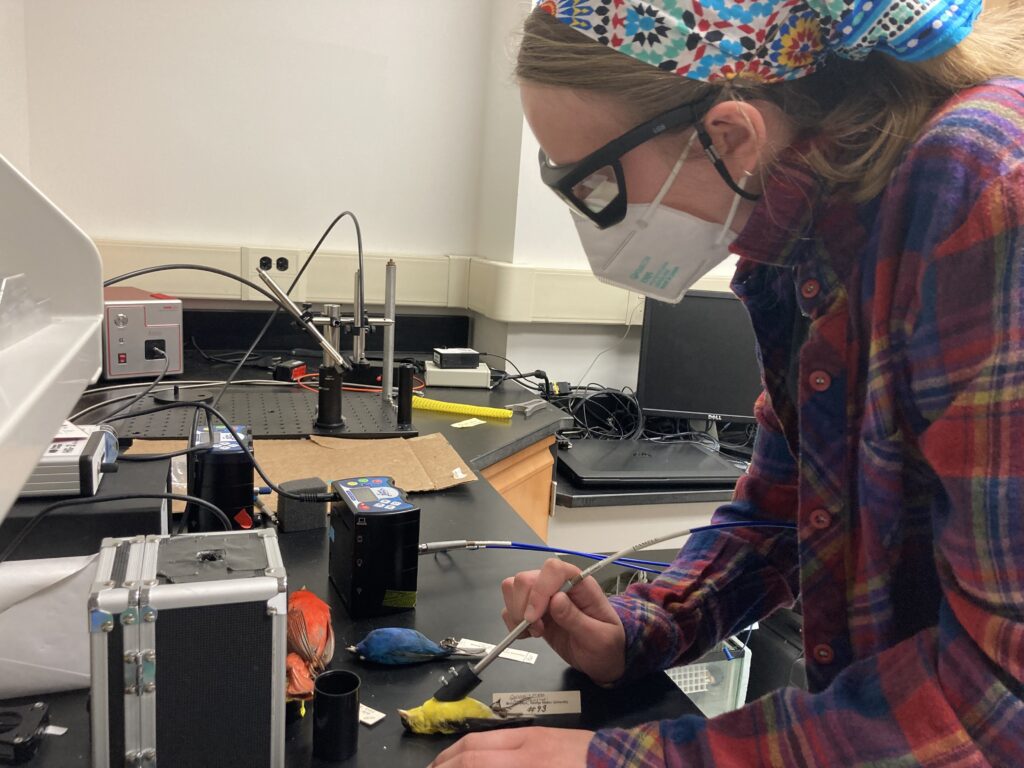
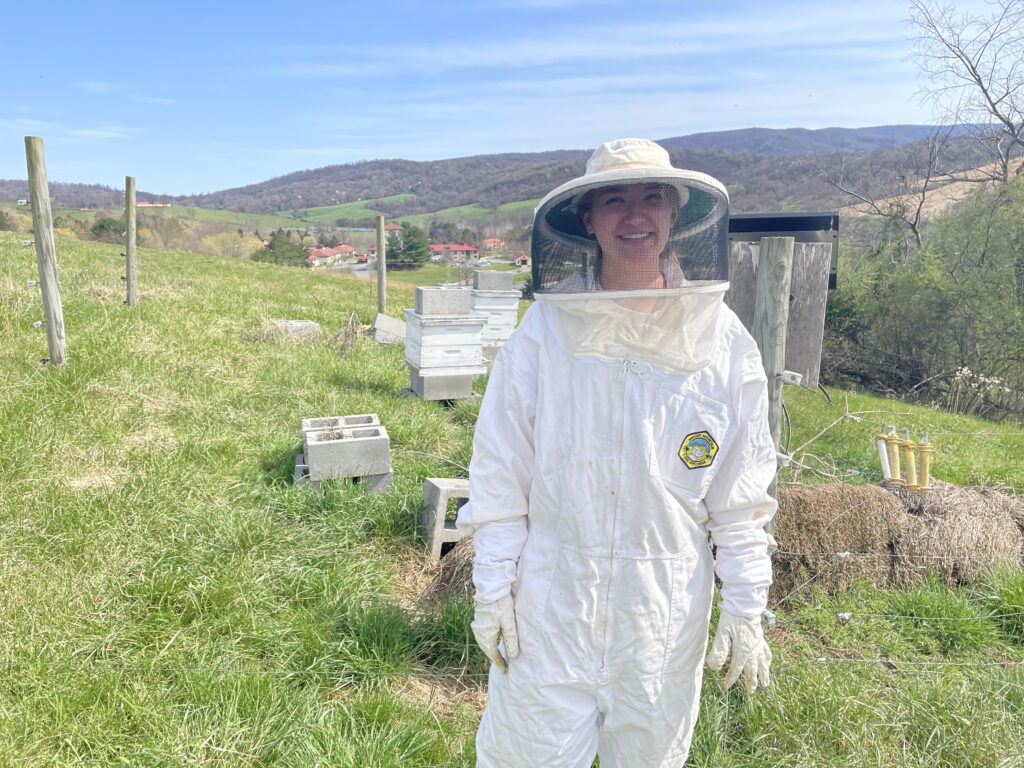
Prior to graduating, Anna attended the Smithsonian-Mason School of Conservation (SMSC) in Front Royal, Virginia and participated in the Endangered Species Conservation (ESC) program. During her five-week research placement, she worked alongside GMU’s Dr. Daniel Hanley in the Hanley Color Lab investigating the floral color diversity in the vision of pollinators. Anna described her time at SMSC as an “incredible and unique opportunity,” having made many long-term connections with experts in the conservation field and participated in various experiential projects and activities. She also expressed how it was great to be in close community with other conservation-focused students and receive one-on-one attention from SMSC professors. At the Fairfax campus, Anna said her applied and lab courses were helpful in preparing her for a career in conservation, and she especially enjoyed the beekeeping course.
In the fall of 2023, Anna was hired as a field interpreter for the Meaningful Watershed Education Experience (MWEE) team. She led stations on land use, macroinvertebrate identification, water quality, and biodiversity, teaching seventh grade students about the many aspects of their watershed. She shared that this position taught her how to communicate scientific topics to a wider audience, and she valued the hands-on experience of teaching students in the outdoors.
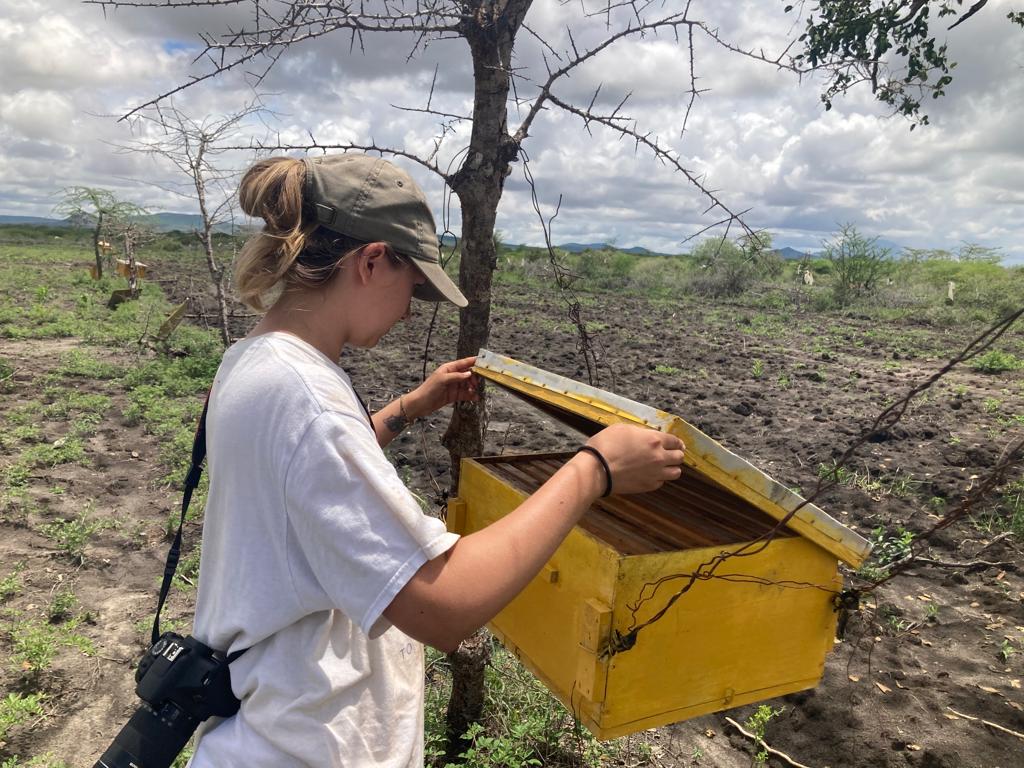
After her time as a field interpreter, Anna traded her fall jacket for a sunhat and traveled across the world to Africa. For seven weeks, she worked as an intern with Save the Elephants in Tsavo, Kenya. One of the main goals of Save the Elephants is to assist local farmers with installing deterrents for elephants. Through this internship, Anna was able to combine her lifelong love for elephants with her passions for endangered species conservation, beekeeping, human-wildlife conflict mitigation, and community outreach. She learned about and implemented different tools to keep elephants away from farms that commonly consist of maize and green gram crops. These deterrents line the perimeter of the farm, including tools such as rags soaked in chili and used engine oil, or loud metal paneling that alerts farmers so they can scare off the elephants. However, one of the main deterrent tools are African bees. Colonies constructed along the perimeter of a farm keep elephants from entering and trampling or eating crops, creating a unique and sustainable method for keeping farmers, crops, and elephants safe. As an intern, Anna frequently inspected hives for occupancy, engaged with farmers, maintained data reports, and even joined a team of experts for a day of tracking elephants using collars and radio telemetry. “It changed my life,” Anna said of her time in Kenya. “I would love to work for Save the Elephants again.”
So, what’s next for Anna? With her passion for both wildlife and people, she said she would like to work with a non-profit and focus on human-elephant interactions. Her future is certainly bright!